Bailong Buoy
Cruise JUVO Leg 2 - 2010
Cruise MOMSEI 2011
Cruise SITE Leg 2 - 2012
Cruise MOMSEI 2013
Cruise SITE Leg 1 - 2013
Cruise SITE Leg 2 - 2013
Cruise JUVO Leg 1 - 2013
Cruise JUVO Leg 3 - 2013
Cruise JUVO 2014 Indonesia Team
Cruise SITE Leg 1 - 2014
Cruise SITE Leg 2 - 2013
Cruise SITE Leg 3 - 2014
Cruise JUVO 2014 China Team
Cruise JUVO 2015
Cruise JUVO 2015 China Team
Cruise SITE 2015
Cruise TIMIT 2016
Cruise SITE Leg 2 - 2014
Cruise TRIUMPH 2018
Cruise TRIUMPH 2019
Cruise TRIUMPH Leg 1 - 2019
Cruise TRIUMPH Leg 2 - 2019
Cruise TRIUMPH 2021
Cruise TRIUMPH 2022
CTP Profiling
TRBM Deployment

Overview
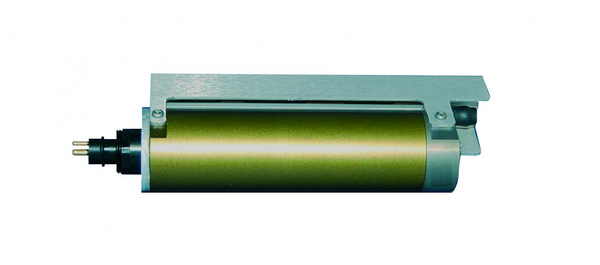
The SBE 4 conductivity sensor is a modular, self-contained instrument that measures conductivity from 0 to 7 S/m, covering the
full range of lake and oceanic applications. The sensor has electrically isolated power circuits and optically coupled outputs to eliminate any possibility of noise and corrosion caused by ground loops. Interfacing is also simplified by the square-wave variable frequency output signal (nominally 2.5 to 7.5 kHz, corresponding to 0 to 7 S/m). The sensor offers improved temperature compensation, smaller fit residuals, and faster turn-on stabilization times.

Because of the SBE 4’s low noise characteristics, hybrid frequency measuring techniques (used in Sea-Bird’s CTD instruments) provide rapid sampling with very high temporal and spatial resolution. The SBE 4 is ideally suited for obtaining vertical data with lowered systems or horizontal data with towed systems. Because of its small size, it is especially useful for moorings, portable CTD systems, or through-the-ice work.

The SBE 4C is a primary sensor for the SBE 9plus, 25, and 25plus profiling CTDs; it has a quick-disconnect fitting to simplify plumbing to the CTD pump. The SBE 4M, intended for long-term moored deployments, is supplied without the quick-disconnect fitting. 

Feature :

  • Cylindrical flow-through borosilicate glass cell with three internal platinum electrodes. The electrode arrangement offers distinct advantages over inductive or open external field cells. Because the outer electrodes are connected, electric fields are confined inside the cell, making the measured resistance (and instrument calibration) independent of calibration bath size or proximity to protective cages or other objects. The cell resistance controls the output frequency of a Wien Bridge oscillator circuit. A unique Sea-Bird design feature introduces a fixed conductivity offset, permitting the SBE 4 to measure conductivity down to 0 for fresh water work.
  • Built-in acquisition circuits and frequency outputs; allows for calibration as separate modules.
  • Each sensor is calibrated in state-of-the-art calibration baths; a water sample at each point is compared to IAPSO seawater using a Guildline AutoSal.
  • Five-year limited warranty.

To See SBE 4 Conductivity Sensor Detail, Visit Website Sea Bird Electronic

SBE 4 Datasheet